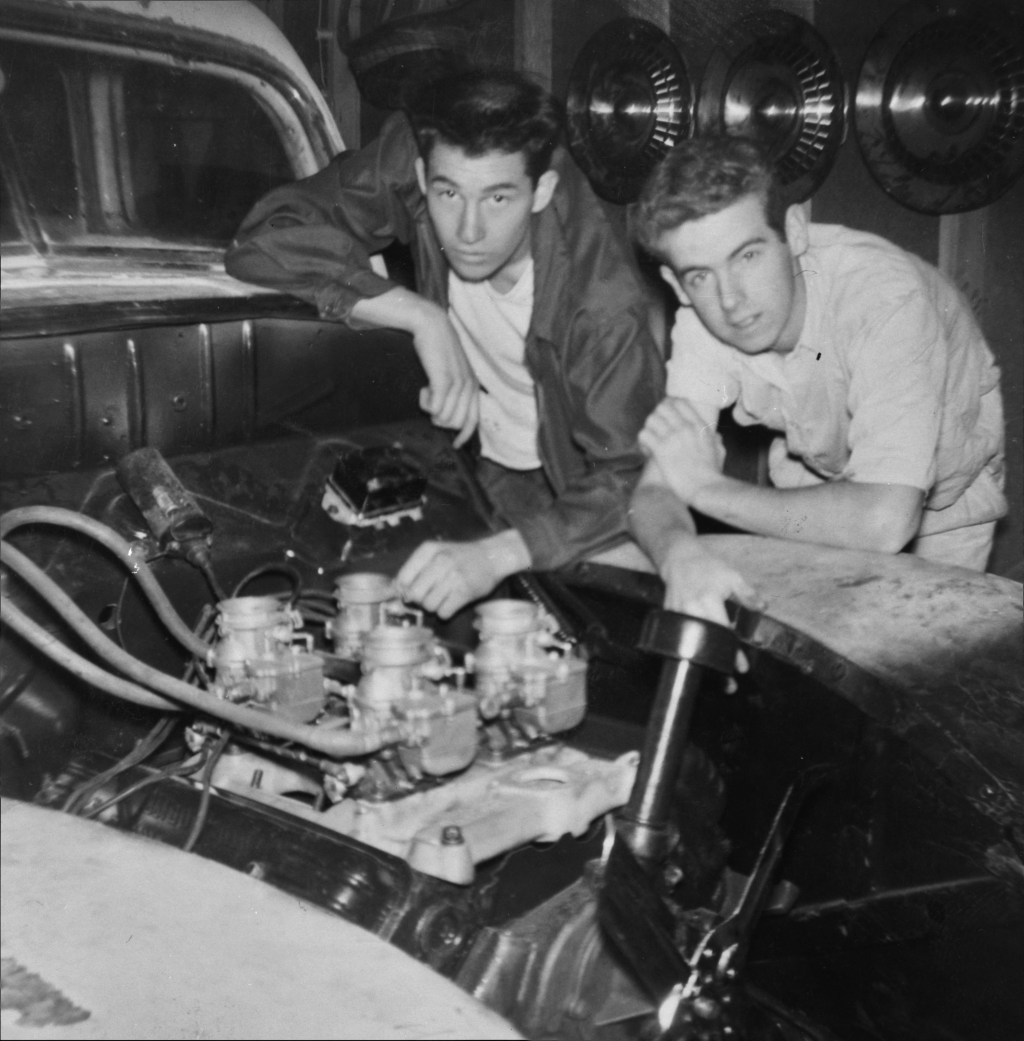
1923 Ford Roadster Pick-Up (1956-1957)
My interest in cars started when I was around 13 years old. That’s when I began regularly visiting the magazine racks at our local drug stores to check out and read car magazines. Specialized car magazines started appearing in the early 1950’s, magazines like Hot Rod, Rod & Custom, and Car Craft. They showed cars that were modified in various ways to increase horsepower, change their appearance, or both, and often referring to them as “hot rods”.
My first car happened by accident. A friend, Mike Bailey, and I ran across an old Ford pick-up body on one of the farms in town. We had seen it there for a couple of months but we didn’t have the courage to ask the farmer if he wanted to sell it. When we finally got up the courage to ask him, he said it was junk to him and we could have it for nothing.
Mike and I became partners in the car. We pieced the car together with parts we had either bought, or were given to us, usually from one of the local farmers. The body was a 1923 Ford roadster pick-up, and the frame and running gear (front and rear axles) were both from a 1930 Ford Model A. The V8 engine and transmission came from a 1936 Ford.
At the time I wasn’t old enough to drive, and what little money I had usually came from working at one of the local farms during my high school summer vacation, either cutting or picking apricots. In order to work I had to have a “work permit”, and I now don’t remember where or who we got the work permits from, but as a minor you couldn’t work without one.
We bought the Model A frame for $5, and to get it from the farm to Mike’s house we had to physically hand carry it across town. We later picked up the front and rear axles at Jack’s Garage, located on the old Mtn. View/Alviso road. Once we had the front and rear axles attached to the frame we went to a couple gas stations to go through their “used tire pile” to pick out some free tires. Finding a couple of tires that were a match, both in style and size, was always a problem. We mounted the used tires on some old steel rims we had, and once installed on the chassis, we were now able to roll/push the frame around town to pick up other heavier parts, like the engine and body.
When we needed something welded, like the motor mounts or shock absorber brackets we would ask one of the local farmers for help, as most farmers had an arc welder to repair their farm equipment. One farmer we used the most lived at what is now the very west end of Mercy Street, next to Stevens Creek. The process involved walking to the farmer’s house and asking him if he could do a small welding job, if he agreed, we would walk back to Mike’s house (1564 Phyllis Ave. now Tyler Park Way) and push the chassis back to the farmer’s house, usually leaving it overnight.
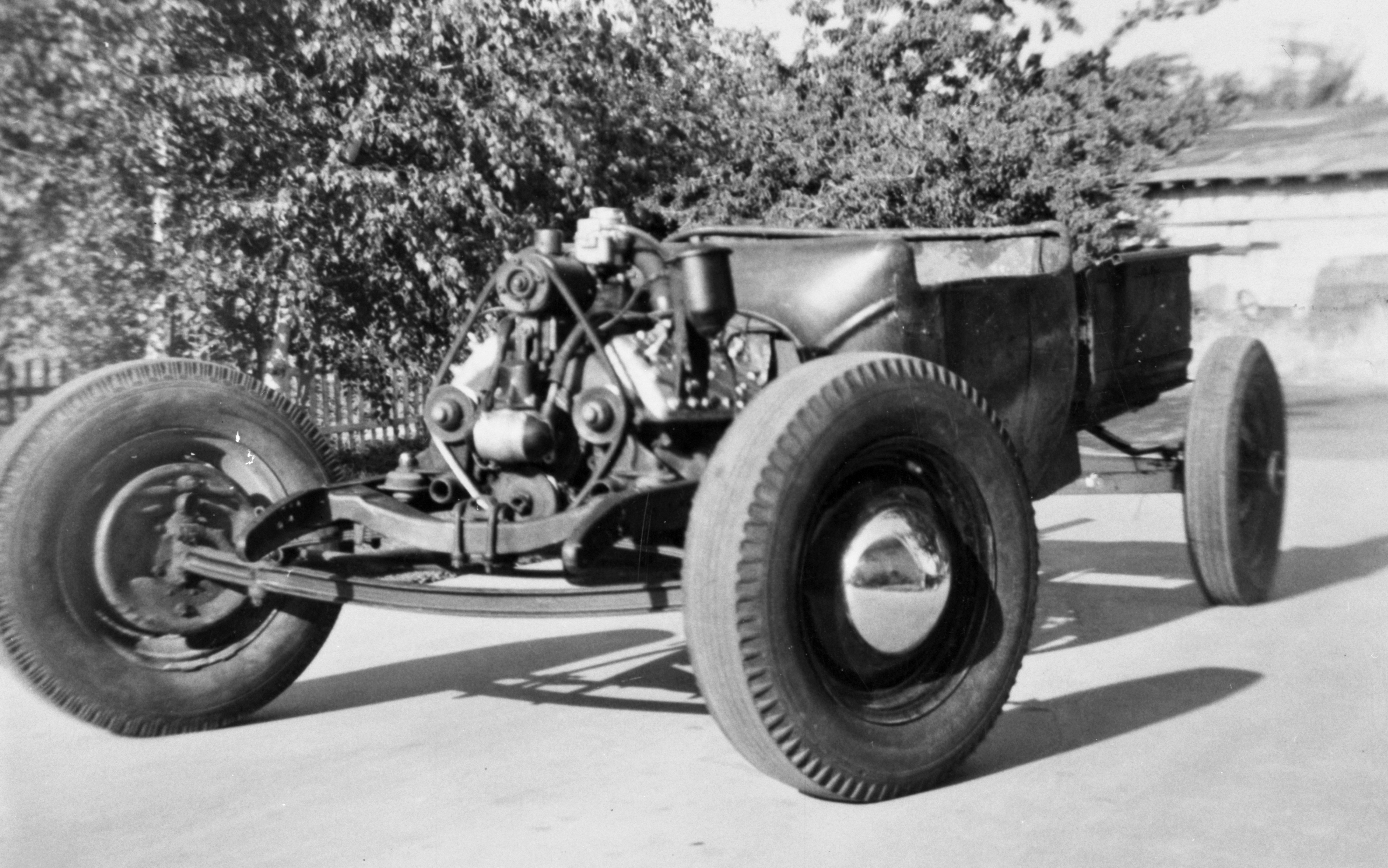
What’s shown in the photo is about as far as we got on the 23 before moving on to other car projects. We did start the motor (less radiator), but we never drove it (Mike thinks we did). We ended up selling the roadster for parts. I kept the Model A frame and running gear for my next car project, moving it (by pushing) to my parents’ house to store in their garage (452 Yosemite Ave.).
Mike Bailey’s 1939 Ford Sedan (1958 to 1960)
About this time Mike received his driver’s license (he was almost a year older than me). His mother was tired of driving us around town and thought he needed his own transportation. So she helped him buy a used, super clean, low mileage 1953 Oldsmobile convertible with a V-8 engine and automatic transmission. The car ran great, and we were now able to get around town on our own. But after a couple of months of driving the new car we decided to replace the automatic transmission with a manual shift transmission. This came about after we read a number of articles in different car magazines about how much horsepower was lost in an automatic transmission due to the torque converter slippage. After receiving a transmission adapter that we had seen in an ad in one of the car magazines, we removed the Oldsmobile transmission and replaced it with a used 1939 Ford truck floor shift transmission. The changeover went well until we got to the clutch linkage and the driveshaft. Not having money for the parts we needed to complete the job the car sat for a couple of months.
While we were waiting for the money, Mike ran across a very used stock 1939 Ford sedan with a broken engine that was for sale for $75. Because we already had the Olds engine adapted to an early Ford transmission, and the Ford sedan was a much cooler looking car than the Oldsmobile convertible, Mike decided to buy the sedan and install the Oldsmobile engine in it. To mount the Olds engine in the Ford chassis Mike bought a pair of custom front motor mounts from Bell Auto Parts in Los Angeles. It was a fairly easy job to remove the 85 horsepower Ford engine and install the 165 horsepower Oldsmobile engine in its place. We used the stock Ford sedan’s transmission and rear end. We had to make a couple electrical wiring changes for the new engine which we did ourselves, using the original 6-volt Ford electrical system. We kludged together the exhaust system using cheap flex-tubing until Mike had the money to have Babe’s Muffler Shop in Mountain View redo the exhaust system. Once we got the car running it turned out to be a lot of fun to drive, work on, and with the increase of 80 horsepower it moved along pretty good. Over the next 4 or 5 months we changed the intake manifold a couple of times to increase the engine’s horsepower. And what was left of the once super clean 1953 Olds convertible was hauled off to the junk yard, which Mike’s mother was definitely not happy about!

The color of the sedan’s stock factory paint was a gray and in fairly good condition, but Mike wanted to repaint the car yellow to give it more of a “hot rod” look. Neither one of us had any kind of experience painting except for our model airplanes that we painted using a paint brush. But when Mike discovered his mother’s 2-year-old Electrolux canister vacuum came with a spray-paint attachment, we decided to use it to paint the car.
We painted the car in Mike’s parents’ driveway using an oil-base paint that we had bought at Anrad’s Hardware store, and even though we wet down the driveway with water before we started painting, we still made a huge mess. Yellow overspray was on everything surrounding the car, trees, shrubs, lawn, driveway, yellow overspray was everywhere! When Mike’s mother saw the mess, she went nuts! We spent most of the next day cleaning up the mess. The Electrolux vacuum cleaner got hit the hardest. We didn’t think to cover it to protect it from the overspray, and without an external filter on the intake of the vacuum the overspray was sucked inside the vacuum plugging up the internal filter bag with paint until it got soaked enough to put a tear in the bag, exposing the fan and motor to the paint. When we finished painting the car we never thought to open the vacuum and clean it. And it wasn’t until the next day before we thought to open it, by then it was too late. It was finished, it just smoked when it was plugged in. Oddly enough the paint job turned out pretty good for our first try at spray painting. Mike aptly named the newly painted yellow car the “Golden Rod”.
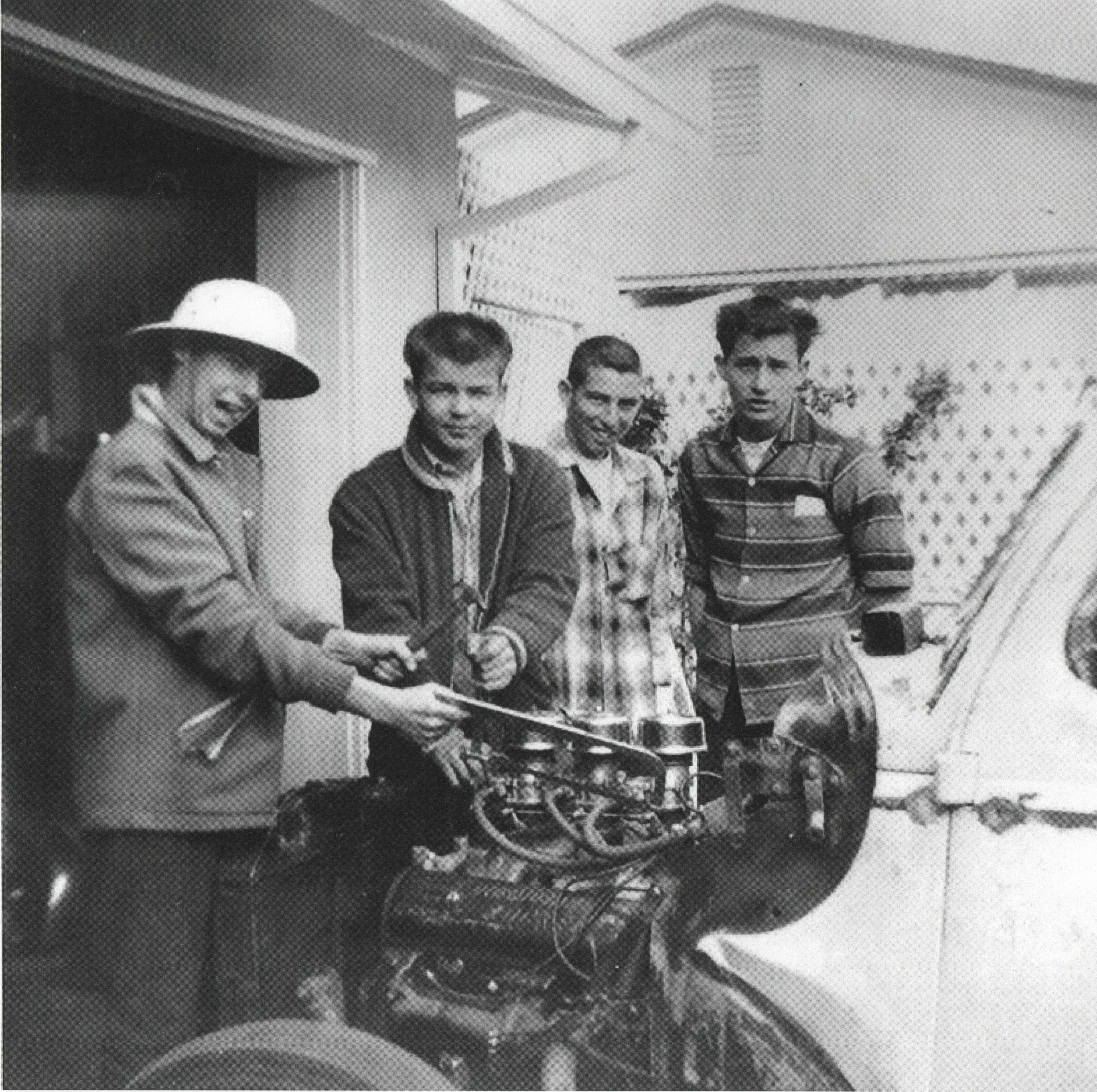
Mike drove the sedan for a couple of years without any major problems except for one that I had while I was driving the car. For some reason Mike had left the sedan at Ken Kline’s house which was just around the corner from my parent’s house. Mike called me to ask if I would drive the car to his house and pick him up. I didn’t have a key to the ignition switch, so I disconnected the switch from the dash and ‘hot-wired’ the ignition terminals using aluminum foil. On the drive over to Mike’s house I picked up another friend, Howard Anderson at his parents’ house.
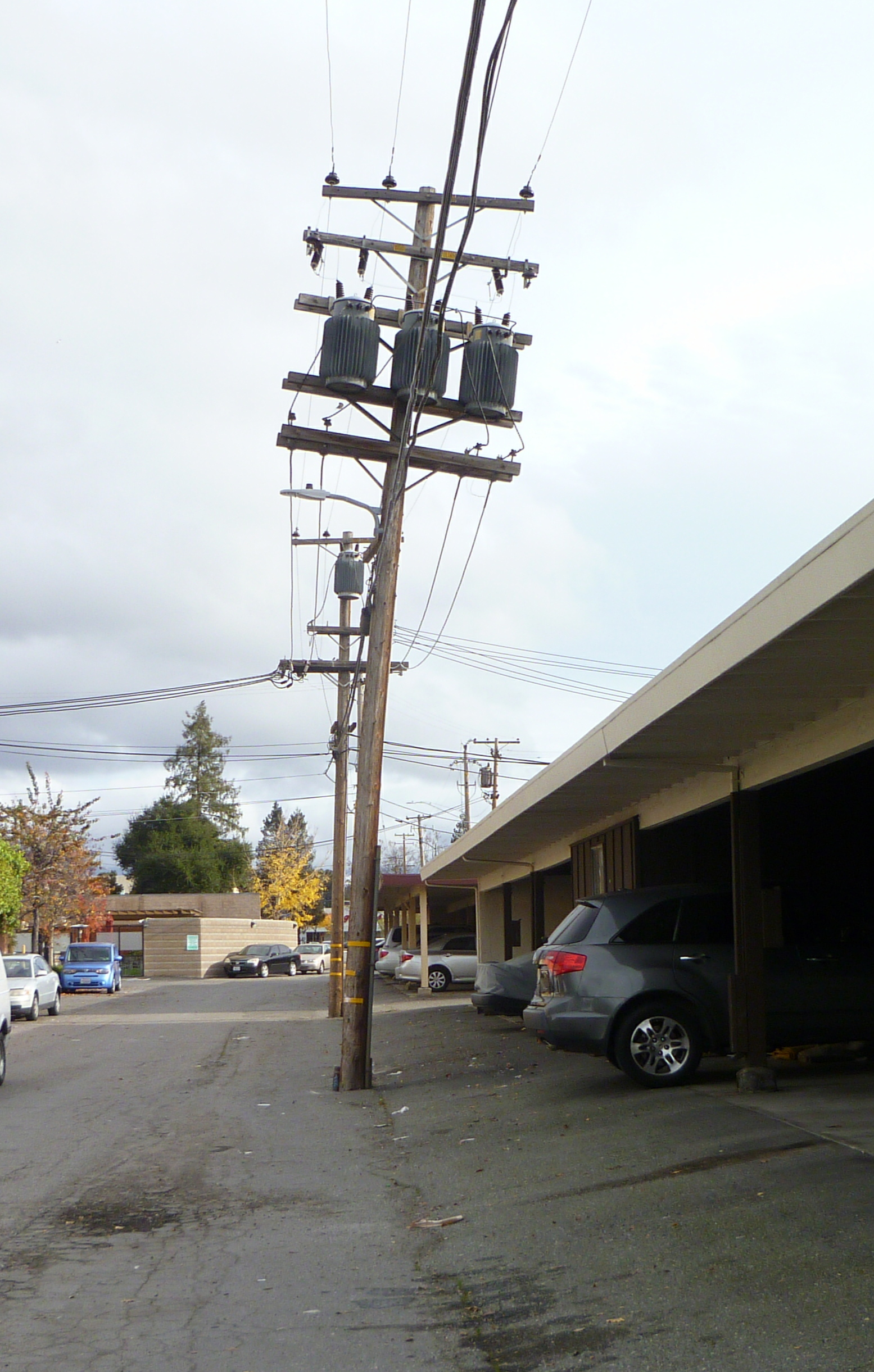
While driving down El Camino, I decided to take a short cut to Mike’s house down a dirt road that ran alongside Mark Tuban’s Ford dealership. At the end of the dirt road was a field that connected to Mike’s Street, Phyllis Ave. (which wasn’t open to El Camino yet). When I made the turn off of El Camino onto the dirt road, I stood on the gas to get out of the way of traffic, and for some reason when I stood on it, the carburetor linkage fell off and got stuck behind an intake manifold bolt.
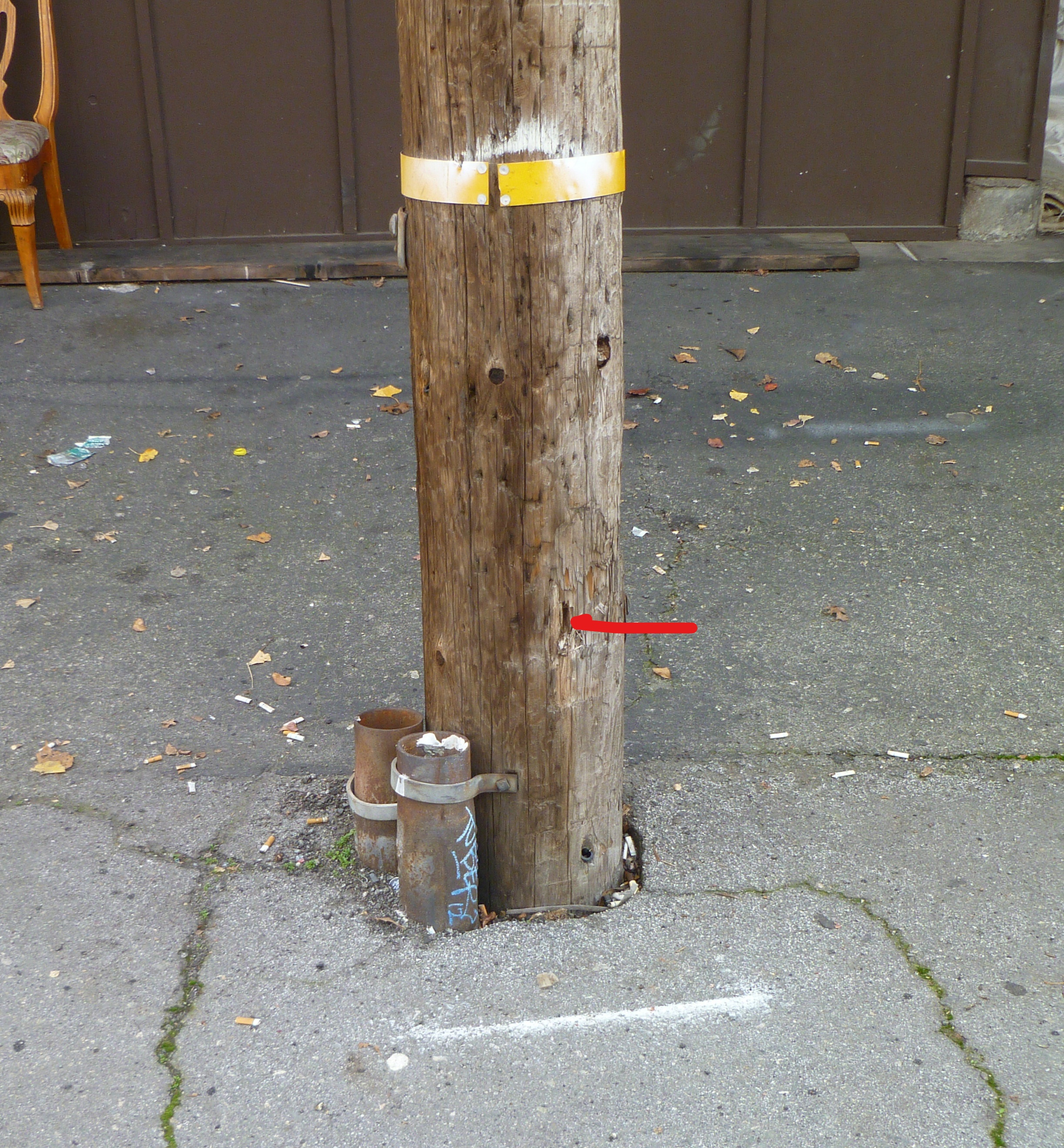
With the throttle now stuck about three quarters open, and the rear tires spinning down the dirt road, I tried to shut the motor off, but was unable to because of the “hot-wired” ignition switch, which was hanging under the dash. I was also unable to pull the gear shift lever out of gear because of the engine’s torque. At the end of the dirt road was a brand-new telephone pole which I tried to miss by swerving the car. But I ended up hitting the pole just a little off center, banging up the passenger side fender and grill, along with pushing the passenger side tow bar bracket into the telephone pole. The tow bar bracket was a 2” steel plate extending beyond the car’s frame rails approximately 8 inches. Fortunately the hard hit unstuck the carburetor linkage which brought the engine back to an idle.
With the tow bar bracket firmly stuck in the telephone pole we were unable to back the car away from the pole. To get the car unstuck from the pole, we unbolted the tow bar bracket from the car’s frame, leaving the tow bracket stuck in the pole. There was no major damage done to the new pole other than the impaled tow bracket, and the pole now leaned slightly to the south. The car was easily fixed by just replacing the fender and grill. The color of the replacement fender was gray, and we decided to leave it like that because of our past experience spray painting. And besides, the sedan was now a true hot rod!
The tow bar bracket stayed impaled in the new pole for almost twenty years until the Ford dealership was closed and the property redeveloped. In his last year of high school, Mike sold the car less its Oldsmobile engine and joined the Navy. I ended up buying the engine with plans on using it on my next project.
 Tom Chambliss: A Life in Stories
Leave a comment