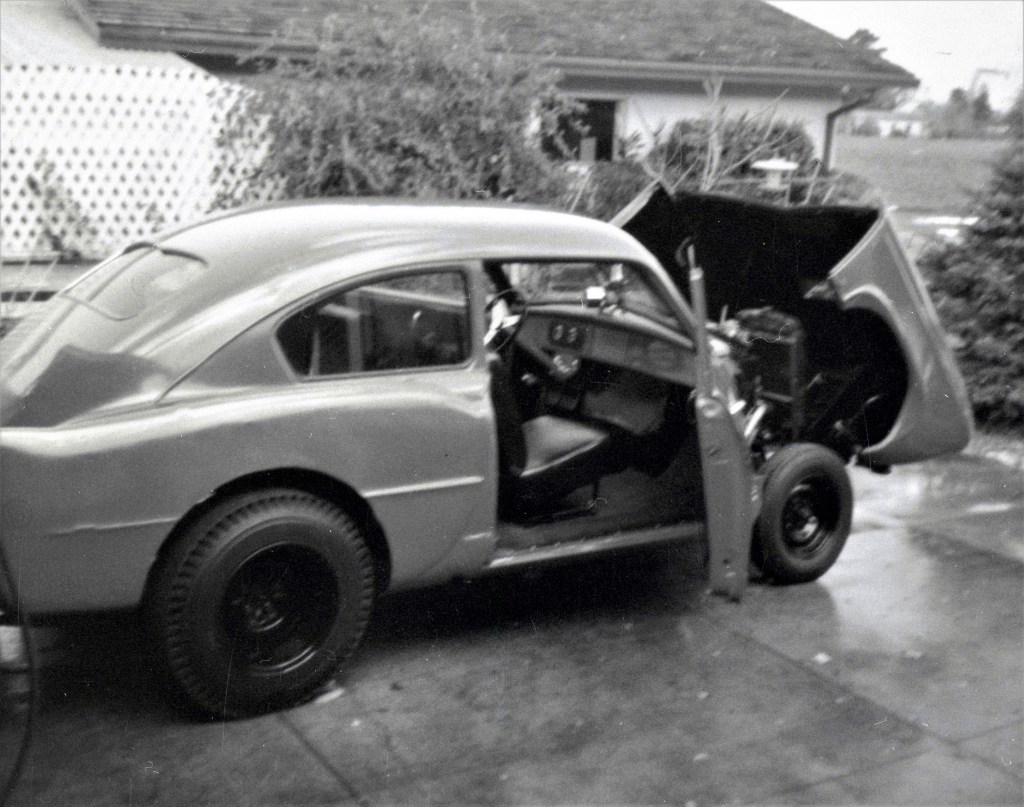
Mike Bailey’s 1950 Henry J (1963 to 1965)
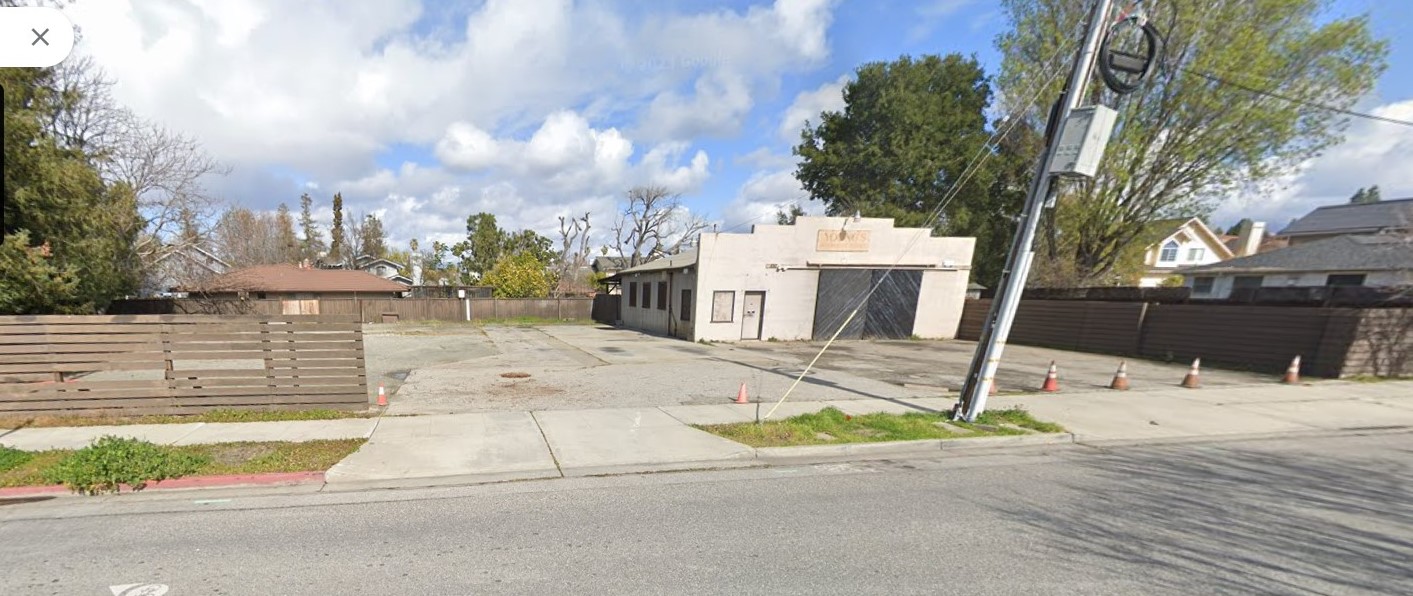
A friend, Bill Moranville, asked me to help him create a drag race car out of a stock 1950 Henry J he had recently bought. Bill lived in Sunnyvale and worked at his father’s body shop at 890 Central Ave. in Mountain View. I’m not sure who Bill bought the Henry J from, but after recently talking to Mike Bailey, he thinks it may have been his car originally. Mike said he owned three Henry J’s between 1959, and 1964, and he’s pretty sure he sold one of the three to either Bill, or Bill’s father.
We began by hinging the front fenders and hood so they would tilt forward to allow easy access to the engine compartment (it also looks cool). In order to do this we removed the front bumper and made-up a couple of hinges that mounted just below the grill. We also had to cut the rear of the front fenders in half just before they curved under the body, leaving the lower part of the fender attached to the body. To align the two parts, we made up a pair of alignment pins that were welded to either side of the fender halves.
For the rear suspension, I used the stock Henry J semi-elliptic springs and replaced the Henry J rear axle housing with a 1957 Oldsmobile housing, which included a couple of brackets for a pair of 50/50 tubular shocks. For traction I built a pair of lift-bars out of rectangular tubing along with a tubing crossmember which acted as a mount for the front of the lift-bars, and to also stiffen-up the side frame-rails. While I was doing the rear suspension, Bill was preparing the body for paint, which included building a hood scoop and radiusing the rear fenders to clear larger rear tires. To help figure out how much to radius the rear fenders Bill bought a pair of used racing slicks mounted on steel wheels. The front suspension and springs were left stock other than adding a pair of 90/10 shocks. I do remember making a couple of spacers that went between the A-frames and chassis to raise the front end of the car for weight transfer.
We looked over the NHRA Gas class rules and found out that a roll bar wasn’t required in a non-supercharged Gas car as long as the body and fenders were steel. The rules did allow for the engine to be moved back 10% of the wheelbase, but that meant major re-working of the firewall and relocating the driver’s seat. Bill decided against the engine set-back, mainly because he thought he might like to drive the car on the street someday. But I found out that even mounting the Chevrolet engine in roughly the same location as the Henry J engine still required major modifications to the firewall to allow easy access to the distributor. I started building the exhaust headers for the Chevrolet engine but never completely finished them because of Bill’s doubts about what he wanted the car to be when it was done.
Bill decided he wanted to have the car re-upholstered before painting it Matador Red. At the time Tijuana, Mexico, was the place to go for car upholstery, and of the 10 or so upholstery shops in Tijuana, Rickie’s Upholstery Shop was the most popular and honest. So I built a quick tow-bar for the Henry J, and the following Friday afternoon Bill and I took off for Mexico in his 1958 Chevrolet Impala with the Henry J in tow. We drove all night down highway 101, arriving at Rickie’s Shop around 6am. There really wasn’t that much to the upholstery in a Henry J, so the guy’s at Rickie’s kept it fairly simple. After the upholstery was completed late Saturday afternoon we drove up to Long Beach to drop off the Henry J and pick-up a neighborhood friend I had grown up with, Tom Chaffey. Then we drove to Pomona to watch the 1964 NHRA Winter Nationals drag races, camping out Saturday night in the race track’s parking lot, sleeping in Bill’s car. On Sunday we watched the races for most of the day and then we started for home after dropping off Tom Chaffey, and picking up the Henry J in Long Beach.
That evening during the drive home on highway 99 we started hearing a ticking sound that sounded like it was coming from the transmission floor shifter. After an hour of light ticking the sound suddenly got louder and the engine started shaking. Luckily we were able to pull-off the freeway and make it to a Standard gas station in Delano (Delano is approx. 40 miles north of Bakersfield). We later found out a rod bearing had spun, causing a connecting rod to break. Bill called his father and told him what had happened and his father said he would come down the next day and pick up the cars.
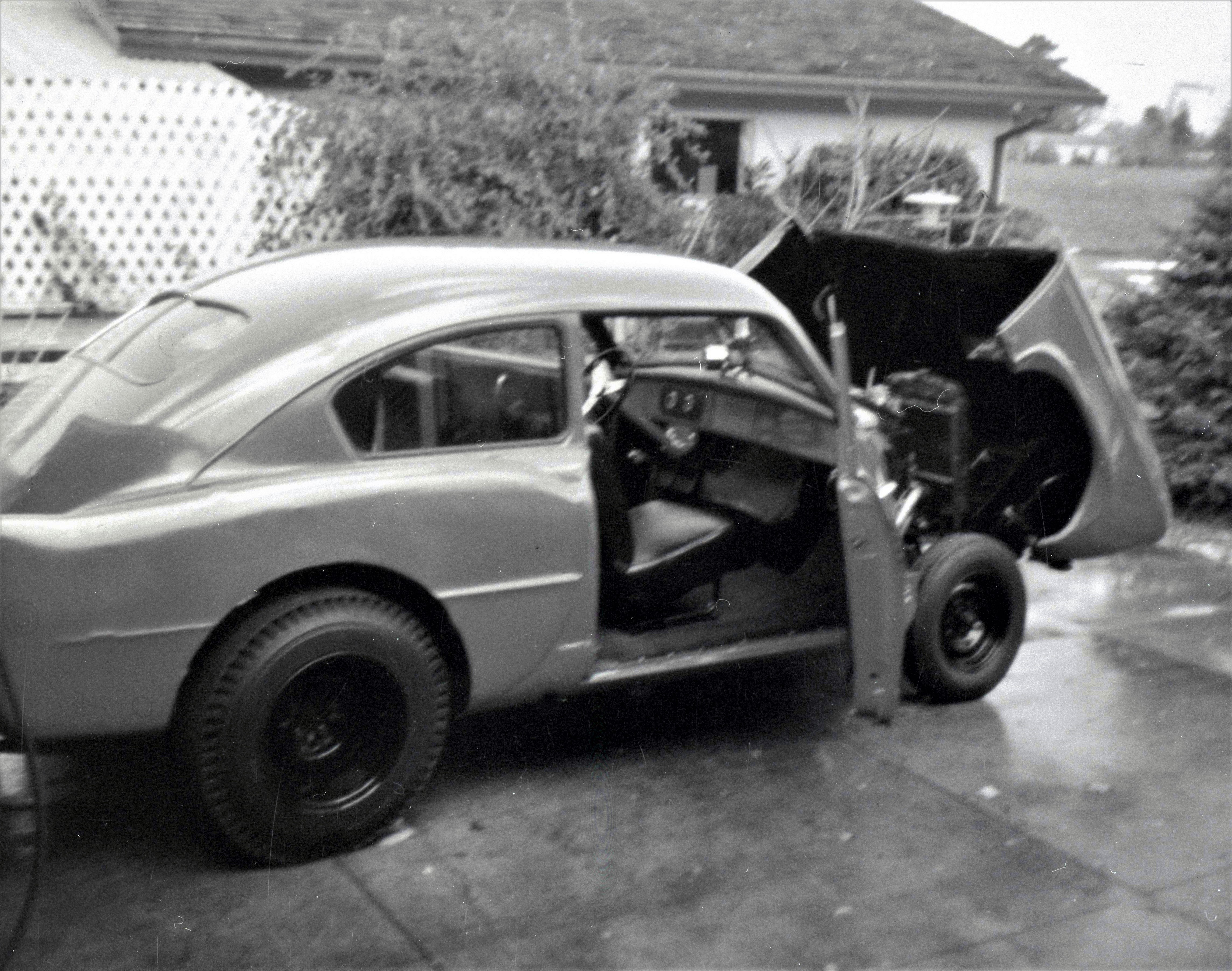
wheels/tires Bill bought when he radiused the rear fenders.
The nights are very cold in Delano during the month of February. We tried sleeping in the car but after an hour or so the windows started icing up. I started the broken engine and let it shake and rattle for a while to try and get some heat inside the car, but it finally seized up so we spent the rest of the night standing around the gas station’s office trying to stay warm. Bill’s father arrived the next morning and towed Bill’s ’58 Impala home first. The following day he did the same with the Henry J. This must be why Bill’s father’s nickname was “Goody”, not many would do what Bill’s father did! Looking back, I think the trip to Mexico was more about the trip than the upholstery.
Not too long after we finished the car (less engine and transmission) Bill decided to sell it. I think the car may have become too much of a race car for Bill to feel comfortable with. He sold the car to Al Vierra, another one of the Mountain View High School car guys. The car sat for a while, and then Al sold it to Mike Bailey (a full circle for this car). Not long after Mike bought the car, he and another high school friend, Bob Ravetto, became racing partners. Mike isn’t sure how the partnership came about, other than he had a car without an engine, and Bob had an engine without a car, which sounds like a marriage of necessity to me.
Bob’s engine was a 327 cubic inch, small block Chevrolet that came out of a Crosley altered drag race car that he built and raced in the early 60’s. He originally built the altered with a Buick engine and automatic transmission, later replacing the Buick with a Chevrolet engine.
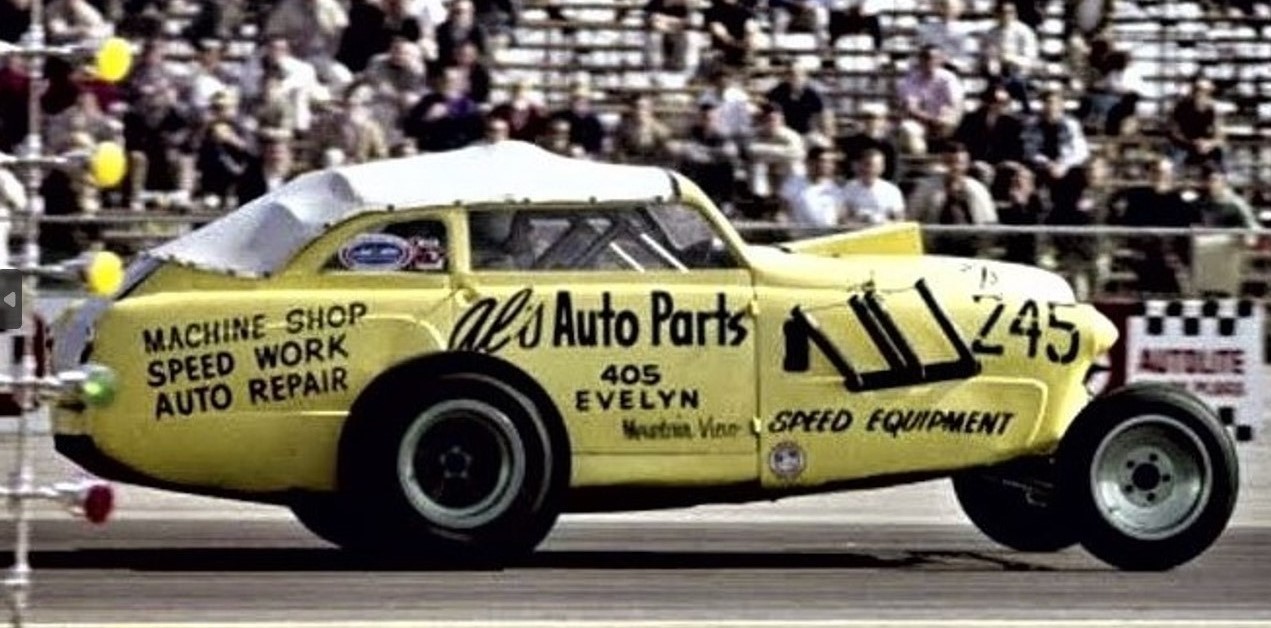
Bob’s altered was sponsored by Al’s Auto Parts of Mountain View, which was an auto parts store and machine shop that repaired cars, rebuilt engines, did custom engine installations, and just about anything else you can think of doing to a car. The store also sold speed equipment along with racing newspapers such as Drag News, National Dragster, and a couple other circle track racing papers. It was a happening place from around 1961 until the owner moved the business to Oakdale, Calif. in 1966. It was a stopping-off place for ‘car guys’ on their way home from work, usually just stopping by to bench race.
I worked in the store’s machine shop off and on in between lay-offs while I was working for Hiller Aircraft until 1965 when I went to work for Fairchild Semiconductor. The store’s owner Ed Decker was an ex-circle track racer who sponsored several drag race cars, including my ’54 Ford. It was a small sponsorship, spark plugs, oil, and race car parts at his cost, but it all helped. The store got its name from the original owner Al Kick, who opened the store on Castro Street in the late 1950’s. He was also the father of Jim Kick, who had bought my Model A sedan. Years later Ed Decker sold the business to John Medlen of Oakdale, Calif. who became John Force’s ‘crew chief’, and the father of Eric Medlen who was killed in 2007 while driving one of John Force’s funny cars.
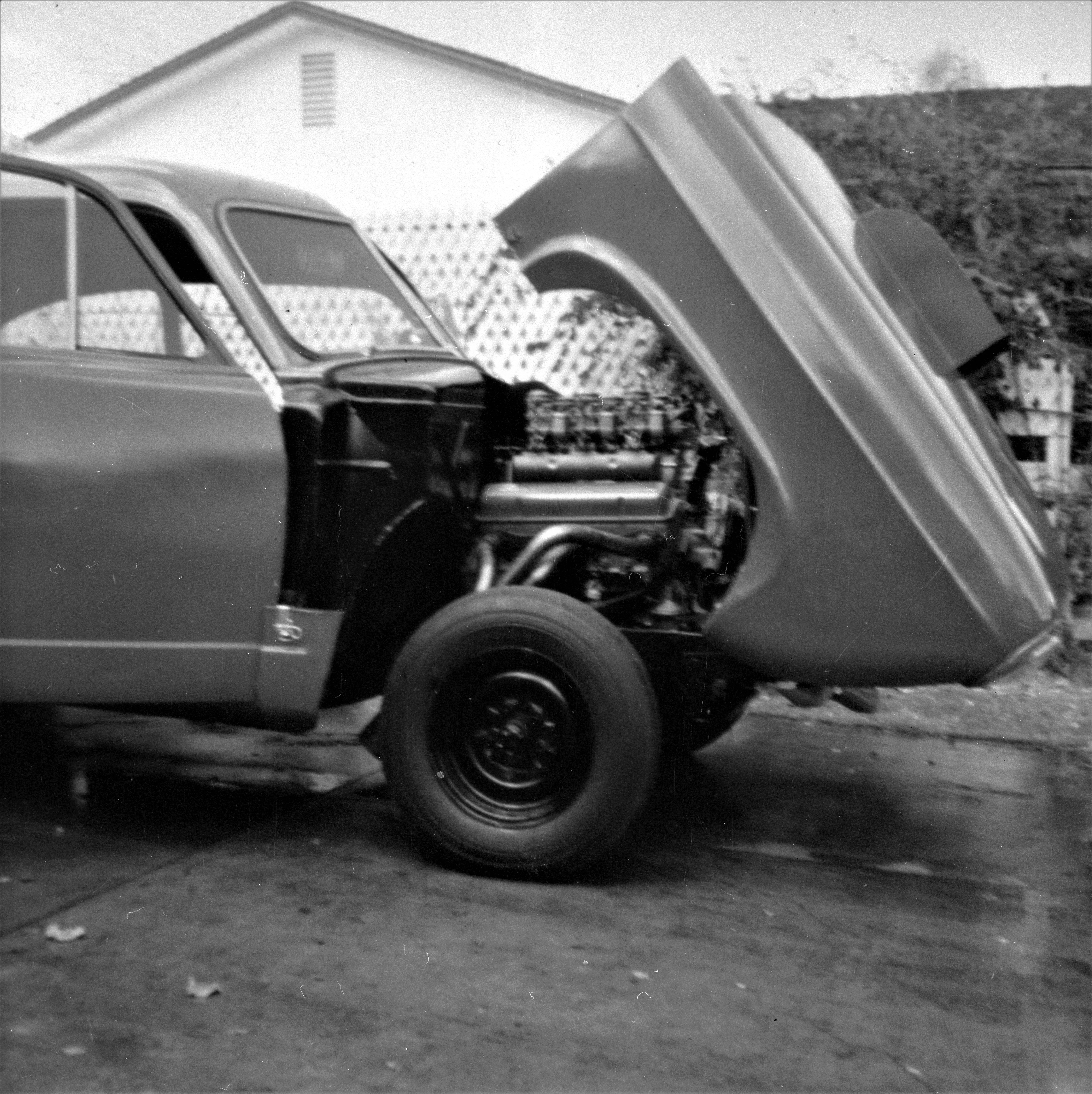
Bob and Mike’s plan was to set-up the Henry J to race in the NHRA B Gas class. They did most of the preparation of the car at the auto parts store during the evenings and weekends. They started by removing the engine, transmission, and Oldsmobile 3rd member from the obsolete Crosley to use on the Henry J. They decided not to use Bob’s B&M hydro transmission, instead replacing it with a Chevrolet 4-speed transmission.
Because NHRA rules required ‘Gas class’ cars to be 100% street legal, Bob completed the exhaust system that I had started, adding long collectors, mufflers, and tail pipes. Mike did the electrical wiring of the car, installing two batteries in the trunk area and making sure the head lights, brake/tail lights, and windshield wipers all worked correctly to comply with the class rules. For the cooling system they used the stock Henry J radiator along with an electric water pump to circulate the water. The car’s final weight was around 2,800 pounds which was typical for a B Gas car. The car was completed in the spring of 1965, and after starting the engine and checking the car over at the auto parts store, they took the car to Easy Street to do some ‘starting line’ testing. Easy Street at the time was a country road behind Bob’s parent’s farm.
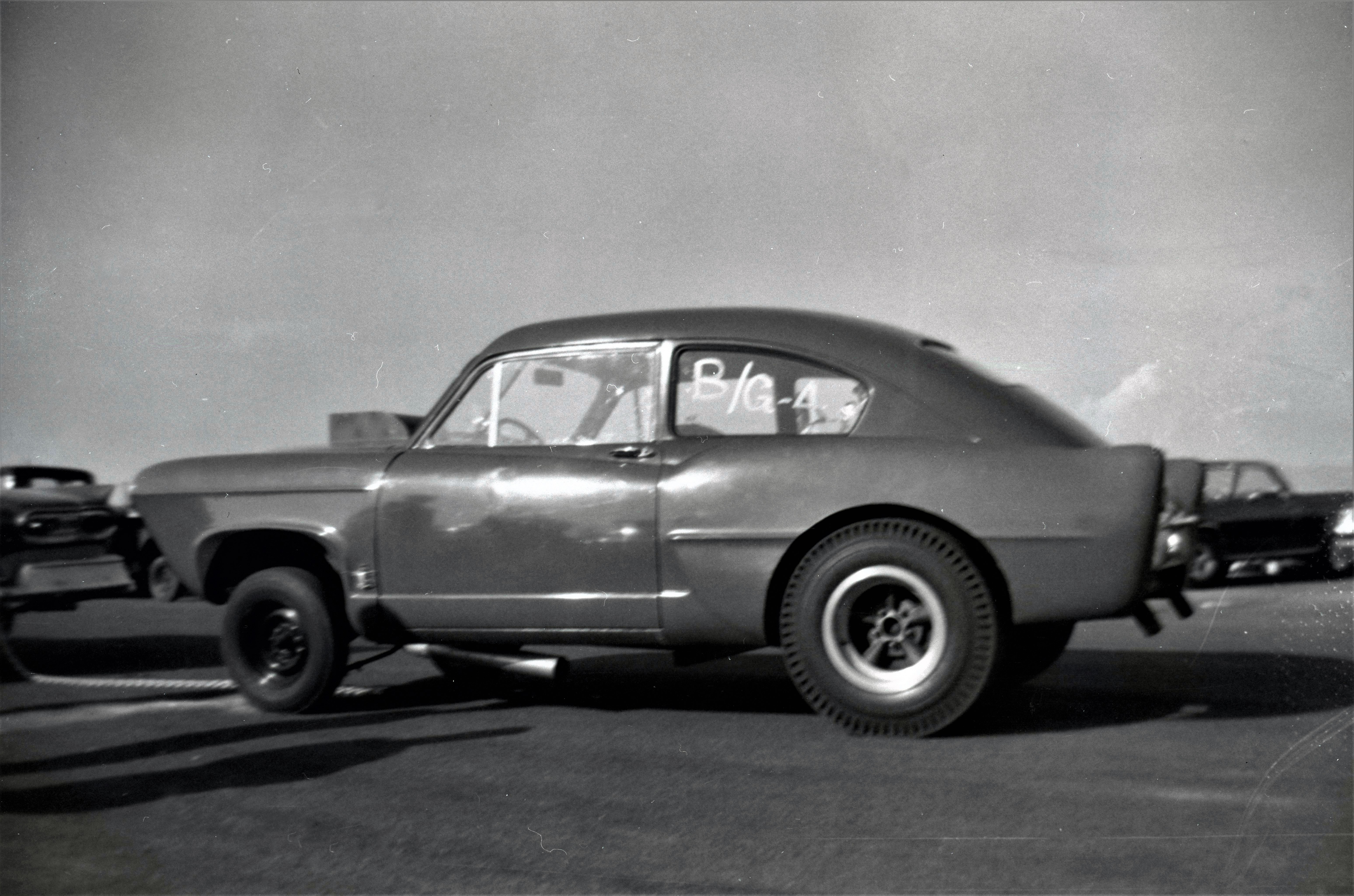
and the rear wheels/tires off of Bob’s Crosley. Bob was the designated driver.
The car performed well and without any major problems. Mike remembers having a lot of fun racing the car, winning a couple of rounds in the B Gas class at several of our local drag strips. For Bob, who usually built unconventional engines and race cars, this was the first time he raced a car that was built with conventional off-the-shelf-parts. The car ran pretty consistent elapsed times in the high 11’s, with speeds around 117 mph. They raced the car for approximately a year and then went their separate ways. Mike is unsure who he sold the car to.
 Tom Chambliss: A Life in Stories
Leave a comment